Insights
Urgent TSCA PFAS Reporting Deadlines: What Manufacturers and Importers Need to Do Now

The U.S. Environmental Protection Agency’s one time Toxic Substances Control Act Section 8(a)(7) PFAS reporting requirement opens April 13, 2026, and closes October 13, 2026. Although the final deadline isn’t until October 2026, most companies need to begin preparing now. EPA expects complete, defensible submittals that may require substantial historical data review, supplier coordination, and cross functional internal alignment.
If your organization manufactured or imported chemicals—or articles containing chemicals—between 2011 and 2022, this rule may apply. Early preparation helps reduce compliance risk, avoid last minute data gaps, and will position your organization for a smoother reporting process.
What Is TSCA Section 8(a)(7) PFAS Reporting and Why Does It Matter?
Under TSCA Section 8(a)(7), codified at 40 CFR Part 705, EPA requires manufacturers and importers to submit detailed information on PFAS chemicals manufactured or imported for commercial purposes from January 1, 2011, through December 31, 2022. This reporting program is a one time effort, intended to close data gaps and support EPA’s ongoing PFAS risk evaluation and future regulatory actions.
Who Must Report Under TSCA PFAS Reporting Requirements?
The reporting obligation applies broadly. You may be subject to reporting if you:
- Manufactured PFAS in the United States
- Imported PFAS into the United States
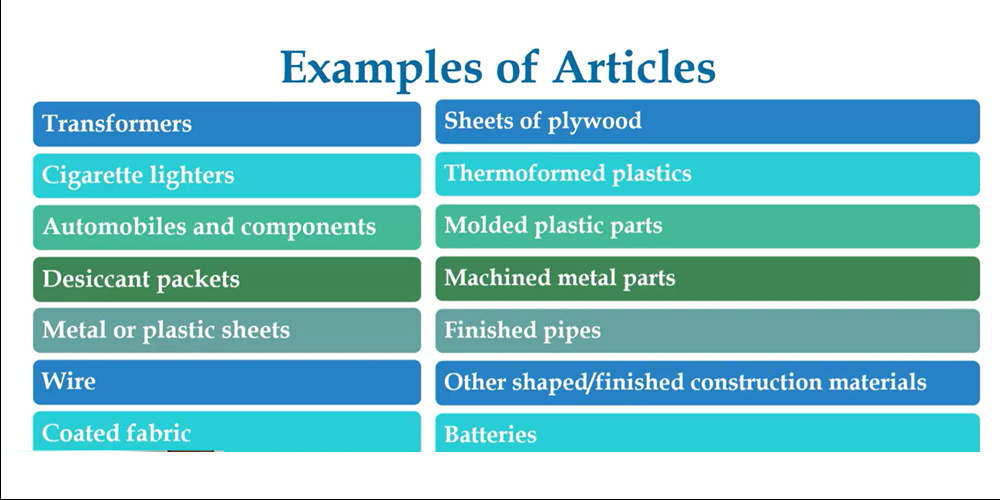
- Imported articles (finished or semifinished products) containing PFAS
Under TSCA, the term manufacture includes import and can also apply to substances that are coincidentally produced during other manufacturing, processing, use, or disposal activities.
Not sure if you meet these definitions? Reach out to MFA and we can work with you to confirm your applicability.
TSCA PFAS Reporting Requirements for Article Importers and Small Manufacturers
- Article importers are not exempt. While EPA has provided streamlined reporting options for certain articles, companies must still assess applicability.
- Small manufacturers are generally not exempt. Some small manufacturers that only import PFAS as part of articles may qualify for extended reporting deadlines, but applicability must still be evaluated.
What Information Is Required for TSCA PFAS Reporting?
Companies must report all information known or reasonably ascertainable, including information in their control and information a company would be expected to know.
Key data elements include:
- Company and site information
- PFAS chemical identity
- Physical form and intended use
- Annual production or import volumes
- PFAS byproducts
- Environmental and health effects data
- Worker exposure information
- Disposal and waste management practices
Because the reporting period spans more than a decade, many organizations will need to rely on legacy data, institutional knowledge, and supplier outreach to assemble a complete submittal.
Unsure if a product you manufacture or import contains PFAS chemicals? Reach out to MFA for support in understanding how to make this determination.
TSCA PFAS Reporting Deadlines, Timing, and Enforcement Risk
- Standard Reporting Window: April 13, 2026 – October 13, 2026
- Extended Deadline for Certain Small Manufacturers: April 13, 2027
All reports must be submitted electronically through EPA’s Central Data Exchange (CDX) system. Failure to report may constitute a TSCA violation, potentially resulting in enforcement or penalties.

How to Prepare for TSCA PFAS Reporting in 2026
Although the reporting window opens in April 2026, most organizations will need significant lead time to develop accurate and defensible submissions.
Recommended early action steps include the following:
- Establish a cross‑functional internal team (EHS, legal, procurement, operations)
- Evaluate manufacturing and import activities back to 2011
- Develop a methodology for identifying PFAS in products and materials
- Build a comprehensive PFAS inventory
- Engage suppliers and sub-suppliers, including foreign manufacturers
TSCA PFAS Reporting FAQs and Additional Guidance
Activities Excluded from TSCA PFAS Reporting
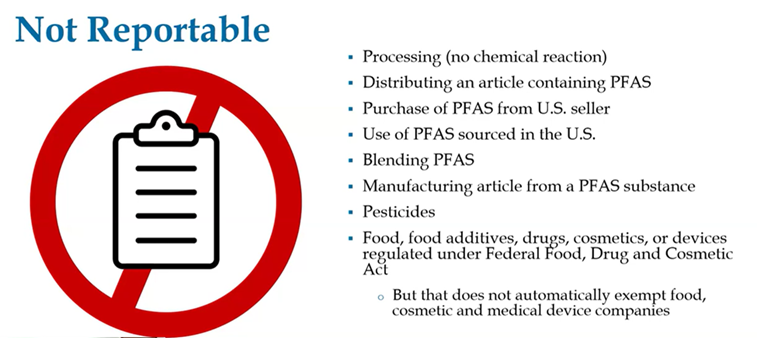
Certain activities—such as processing without chemical reaction, distribution of PFAS‑containing articles, or use of PFAS sourced entirely within the United States— are excluded from reportable manufacturing under the rule. Some substances regulated under the Federal Food, Drug, and Cosmetic Act are also excluded; however, applicability is highly site‑specific and often requires a structured regulatory review.
Why EPA Is Requiring TSCA PFAS Reporting
EPA has identified significant data gaps related to PFAS manufacture, use, exposure, and disposal. This reporting rule is intended to:
- Improve understanding of PFAS life cycle impacts
- Support future risk evaluations and regulations
- Inform enforcement, risk management, and public disclosure efforts
TSCA PFAS Reporting Key Takeaways
- TSCA Section 8(a)(7) creates a one‑time PFAS reporting obligation covering 2011–2022
- Manufacturers, importers, and article importers may all be affected
- Reporting relies on what is known or reasonably ascertainable
- The primary reporting window runs from April to October 2026
- Early preparation significantly reduces compliance and enforcement risk
Contact Us
TSCA PFAS Reporting Support
Need help evaluating how TSCA Section 8(a)(7) applies to your organization? Reach out to get started.

Share this article on social media/email
Author