In the News
Reducing Firefighter Exposure to Carcinogens: Practical Steps That Make a Difference
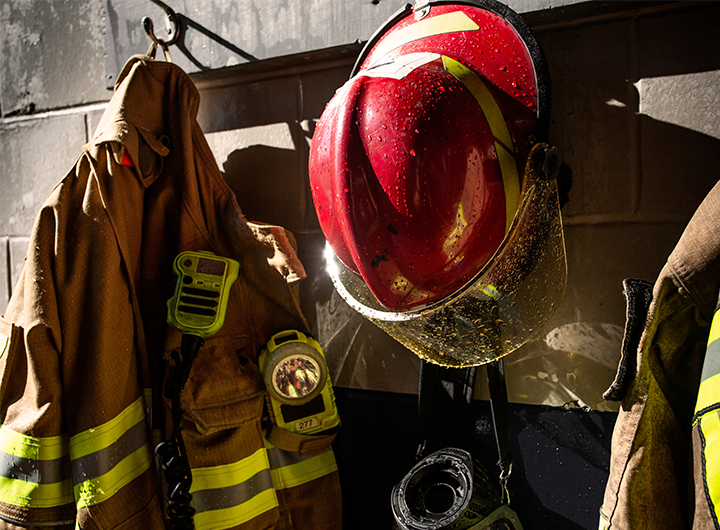
Firefighters face an increased risk of cancer compared with the general population. Addressing that risk requires more than technical knowledge, it requires practical, actionable strategies that can be used in real-world conditions.
A recent article in The Synergist, written by MFA principal industrial hygienist Bill Beadie, emphasizes solutions that are both effective and feasible for fire departments.
Read on for a summary of Bill’s article. (Members of the American Industrial Hygiene Association can log in and access the full article).
A More Practical Approach to Industrial Hygiene
Reducing firefighter exposure to carcinogens does not always require large-scale studies or significant investment. Instead, progress often comes from:
- Applying established guidance and standards
- Engaging stakeholders early
- Focusing on feasible, high-impact changes
Effective Ways to Reduce Exposure Risk
Start with the end in mind
It’s critical to understand stakeholder goals and ensure that a risk assessment can help identify useful decisions. Rather than beginning with complex or costly testing, a strong starting point is identifying clear opportunities to reduce exposure using existing best practices. Simple qualitative assessments can often lead to meaningful improvements.
Use sampling to support decisions, not drive them
Sampling can be valuable, but only when it is intentional and clearly tied to decision-making. Targeted, purpose-driven sampling strategies are more effective than broad monitoring efforts.
Collaboration and communication are critical
Industrial hygienists can play an important role in protecting firefighter health when they collaborate with firefighters and other stakeholders. Basing recommendations on standards developed by the firefighting community, e.g., the National Fire Protection Association standards, can simplify communication and help ensure proposed changes are practical.
Solutions that Lead to Actions
As highlighted in The Synergist, this approach reflects a broader shift in industrial hygiene toward practical, solution-oriented work that helps organizations take action sooner.
Insights like these, drawn from experience in the field, continue to shape how industrial hygiene professionals support safer, healthier environments for those who serve their communities.
Let’s Connect
Take the Next Step Toward Reducing Risk
Our team brings a practical, solution-oriented approach to industrial hygiene, helping clients reduce risk, improve decision-making, and implement changes that are both effective and achievable. Get in touch to discuss what this could look like for your organization.

Share this article on social media/email
Author